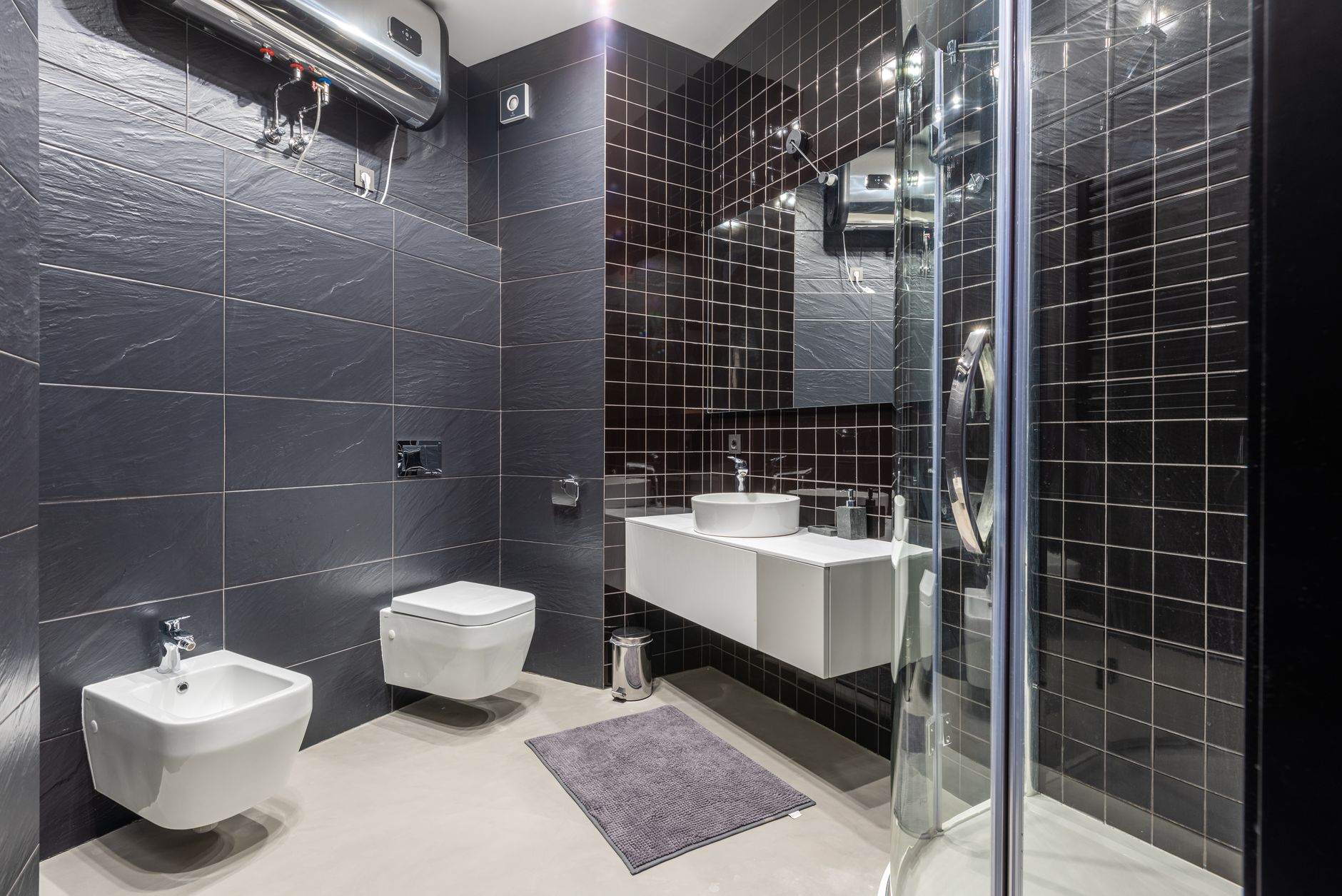
Tankless vs. Traditional Water Heaters: Cost and Efficiency Comparison for Arizona Homes
By P&L Plumbing9 min read
For most Arizona homeowners, tankless water heaters cost $1,171 to $3,331 (bobvila.com) installed. Traditional tank units run $650 to $2,500+ (doctorwaterheater.com). Tankless models are 24%-34% more energy efficient for lower-usage homes (energy.gov). In Phoenix metro hard water conditions, tankless units require annual descaling. Most East Valley homeowners break even on tankless within 6 to 10 years.
How Tankless and Traditional Water Heaters Actually Work
Understanding the core mechanics helps you evaluate which system fits your Mesa, Gilbert, or Chandler home. A tankless water heater uses a high-powered gas burner or electric element. It heats water only when you open a tap. Cold water flows through a heat exchanger, exits hot, and the unit shuts off the moment demand stops. There is no stored water, which means no standby heat loss burning energy around the clock. A traditional storage tank heater keeps 40 to 80 gallons preheated at all times. It continuously fires to maintain temperature. This happens even when nobody is home. Water heating accounts for about 18% of a home's energy use nationally (energy.gov), so eliminating standby loss is a meaningful gain. Tankless units provide hot water at 2-5 gallons per minute. This rate depends on the model and fuel type. It handles most household tasks. However, it can struggle with multiple simultaneous uses.
What Makes Arizona's Climate Unique for Water Heater Performance
Arizona's environment creates conditions that no national spec sheet fully addresses. Phoenix metro groundwater averages 250 to 300 parts per million. This places it among the hardest municipal water supplies in the United States. That mineral load hits both system types hard, but in different ways. During summer, incoming cold water temperatures in the Phoenix metro reach 80 to 90°F. This reduces the energy required to heat water to a usable temperature. Both systems gain an efficiency boost that colder-state homeowners never see. Tank heaters stored in uncooled garages face a different problem. Ambient temperatures can exceed 100°F. The tank's insulation works against an environment hotter than the target water temperature. This creates unusual stress. Scale buildup from hard water is consistently the top cause of early water heater failure in Mesa, Gilbert, and Chandler, according to local plumbing service records. That fact shapes every recommendation in this guide.
What the Real Installation and Operating Costs Look Like in the Phoenix Metro
Cost is where most homeowners start and where many comparisons fall short. That means tankless is often roughly $500 to $1,000+ more upfront (bobvila.com). But those headline numbers hide important line items. Gas line upgrades for tankless installation add $200 to $600 (energy.gov). Older Mesa and East Valley homes often need them. The existing supply line cannot handle the higher BTU demand. Electric tankless whole-home systems require at minimum a 200-amp panel, and many East Valley homes built before 2000 need a panel upgrade that runs $1,500 or more on its own (energy.gov). Nationally, tank heaters cost $450-$600 per year to operate, while electric tankless units run $250-$400 per year (thermomate.com). In the Phoenix metro, gas prices tend to soften operating costs further, which is why gas tankless remains the most popular upgrade choice our crews install across Chandler and Queen Creek.
How Long It Takes to Break Even on a Tankless Water Heater in Arizona
The break-even calculation for Arizona homeowners requires honest accounting beyond the purchase price. Annual savings when switching from a traditional tank to a tankless unit run $150-$300 nationally (thermomate.com), but Arizona's lower natural gas rates and warm incoming water temperatures tend to compress savings slightly compared to colder-climate households. That narrows the payback window to 6 to 10 years depending on the size of the installation premium. Homeowners planning to stay 10 or more years in neighborhoods like Sun Lakes, Ahwatukee, or San Tan Valley see the strongest return. APS and SRP utility rebates of up to $200 may offset part of the upfront cost, and the federal tax credit of up to 30% applies to qualifying Energy Star heat pump water heaters through 2032, which meaningfully changes the math for homeowners open to that third option (energy.gov).
Tankless vs. Traditional Water Heaters: Feature-by-Feature Comparison
A side-by-side breakdown reveals trade-offs that narrative descriptions tend to obscure. The table below focuses on the specific variables that matter most to Phoenix metro and East Valley homeowners, including hard water performance and local installation realities. Use it as a quick reference before calling a licensed Arizona plumber for a site-specific quote.
Comparison Table: Tankless vs. Traditional Water Heater for Arizona Homes
The table covers the eleven factors our team at P&L Plumbing finds most decisive when advising Mesa, Gilbert, and Chandler homeowners on a water heater replacement.
| Feature | Tankless Water Heater | Traditional Tank Water Heater |
|---|---|---|
| Upfront Cost (Installed) | $1,171 to $3,331 | $650 to $2,500+ |
| Annual Operating Cost (AZ) | $185 to $260 (gas) | $280 to $380 (gas) |
| Lifespan | 20+ years | 10 to 12 years |
| Hot Water Supply | Unlimited (2-5 GPM) | 40-80 gallon capacity |
| Recovery Time | Instant | 30 to 40 minutes |
| Hard Water Maintenance | Annual descaling required | Annual flush recommended |
| Flood Risk | None | Tank rupture possible |
| Space Required | Wall-mounted, minimal | Floor space, 40-80 gallon footprint |
| Gas Line Upgrade Needed | Often required ($200-$600) | Rarely required |
| Break-Even Period (AZ) | 6 to 10 years | N/A (lower upfront) |
| Best For | Long-term owners, 10+ year horizon | Budget buyers, short-term owners |
Pros and Cons of Each System for Arizona Homeowners
Every water heater choice involves real trade-offs. No system is perfect. The goal is matching the right trade-offs to your household's priorities, budget, and timeline.
Tankless water heater pros:
- Lower long-term energy cost: tankless units are 24%-34% more energy efficient for moderate-usage homes (energy.gov)
- Longer lifespan: more than 20 years versus 10 to 12 years for tank models (energy.gov)
- No flood risk from tank rupture, which is a real concern given that a failing 50-gallon tank can release its entire volume inside a home
- Compact wall-mount design frees up significant floor space in Arizona utility rooms and garages
Tankless water heater cons:
- Higher upfront cost, often $500 to $1,000+ more than a traditional tank (bobvila.com)
- Annual descaling is not optional in Arizona's hard water market, adding $80 to $150 per year in maintenance cost
- May require a gas line upgrade, adding $200 to $600 in older East Valley homes
- Flow rate of 2-5 GPM means large households running multiple hot water draws simultaneously can experience reduced temperature
Traditional tank water heater pros:
- Lower upfront cost makes it accessible for budget-conscious homeowners and rental property managers
- Simpler installation with fewer code-driven upgrades in most Arizona homes
- Handles simultaneous high-demand usage without flow rate limitations
- Familiar technology with a wide pool of licensed plumbers experienced in repairs
Traditional tank water heater cons:
- Standby heat loss raises monthly utility bills year-round
- Shorter lifespan of 10 to 12 years means more frequent replacement cycles (consumerreports.org)
- Sediment buildup accelerated by Arizona's 250 to 300 ppm hard water shortens effective lifespan further
- Tank rupture risk grows as units age, and 65% of American households already run water heaters older than 10 years (marketdataforecast.com)
Which System Handles Arizona Hard Water Better
Hard water is the defining maintenance variable in this comparison, and it deserves more than a bullet point. Arizona's groundwater sits firmly in the "very hard" classification by US Geological Survey standards, with Phoenix metro water averaging 250 to 300 parts per million of dissolved calcium and magnesium. Scale deposits build inside a tankless unit's heat exchanger without treatment. This can reduce thermal efficiency by up to 25% (marketdataforecast.com). The damage happens within a few years. Annual descaling by a licensed plumber restores efficiency and protects the heat exchanger, but it adds a recurring cost that does not appear in most tankless sales pitches. Traditional tank heaters accumulate sediment at the bottom of the vessel, which insulates the burner from the water above it, forces longer heating cycles, and shortens the unit's functional life. Both systems suffer. The most effective long-term protection strategy in Mesa, Gilbert, and Chandler is pairing either water heater type with a whole-home water softener or template-assisted crystallization system. At P&L Plumbing, we consistently see water heaters paired with softeners outlast unpaired units by three to five years, regardless of system type. That pairing is not an upsell. It is the only honest recommendation for Arizona hard water.
Which Water Heater Arizona Homeowners Should Actually Choose
The right answer depends on four variables: your timeline, your household size, your current gas and electrical infrastructure, and whether you plan to add hard water treatment. Here is a clear decision framework based on those factors.
Choose tankless if four conditions apply. First, plan to stay in your East Valley home for 10 or more years. Second, your gas line can support higher BTU demand or you will upgrade it. Third, your household uses moderate hot water, not peak simultaneous demand. Fourth, commit to annual descaling service. The energy efficiency gain of 24%-34% for moderate-usage homes (energy.gov) and the 20-plus-year lifespan make this the stronger long-term investment when those conditions align.
Choose a traditional tank if you are on a tight installation budget, managing a rental property in Tempe or Scottsdale where simplicity and low service calls matter, or planning to sell within five years. The lower upfront cost and simpler installation make the tank heater the pragmatic choice for short horizons. Large households with four or more occupants running simultaneous hot water draws should evaluate high-flow tankless models rated above 9 GPM or consider a tandem tank setup before committing.
What to Ask Before Choosing a Water Heater Installer in Arizona
Selecting the right installer is as important as selecting the right equipment. Arizona homeowners should verify that any plumber holds an active Arizona Registrar of Contractors license before work begins. A permit is required for water heater replacement under Arizona building codes. Ask for a written, itemized quote that breaks out the equipment cost, labor, any gas line or electrical panel upgrades, permit fees, and whether a descaler flush at installation is included. Request references from similar East Valley homes, especially if the property has galvanized pipes or older gas lines. A licensed plumber who pulls a permit and gives a fixed written quote is protecting you. One who skips either step is not.
Frequently Asked Questions
Is a tankless water heater worth it in Arizona's hard water conditions?
Yes, with the right maintenance plan. Arizona's 250 to 300 ppm hard water requires annual descaling at $80 to $150 per service visit, but tankless units still deliver meaningful long-term savings and last more than 20 years. Pairing a tankless unit with a whole-home water softener maximizes both efficiency and equipment lifespan in Mesa, Gilbert, and Chandler.
How much does it cost to install a tankless water heater in Phoenix or the East Valley?
Tankless water heater installation in the Phoenix metro typically costs $1,171 to $3,331, with many homeowners landing around $2,216. Older East Valley homes may need a gas line upgrade adding $200 to $600, or an electrical panel upgrade for electric models. Always request an itemized written quote that includes all upgrade costs before agreeing to any work.
How often does a tankless water heater need to be serviced in Arizona?
In Arizona's hard water market, tankless water heaters require professional descaling once per year. Phoenix metro groundwater at 250 to 300 ppm deposits scale inside the heat exchanger quickly enough that skipping annual service can reduce efficiency by up to 25% and void manufacturer warranties. Budget $80 to $150 per visit as a fixed annual maintenance cost.
Does Arizona's extreme summer heat affect water heater efficiency?
It cuts both ways. Summer incoming cold water at 80 to 90°F reduces the energy needed to reach a usable temperature, which improves efficiency for both system types. However, traditional tank heaters stored in uncooled garages face ambient temperatures above 100°F, which stresses the tank's insulation and can accelerate wear on heating elements and anode rods over time.
Can I get a rebate or tax credit for installing a tankless water heater in Arizona?
APS and SRP utility rebates of up to $200 may be available for high-efficiency water heater installations in the Phoenix metro, though availability changes seasonally. The federal Inflation Reduction Act tax credit of up to 30% applies to qualifying Energy Star heat pump water heaters through 2032. Confirm eligibility with your installer and a tax professional before purchase.
How much do tankless water heaters cost in Arizona?
In Arizona, a tankless water heater typically costs $1,171 to $3,331 installed, with many homeowners paying around $2,216. Gas line upgrades for older homes add $200 to $600. Electric tankless systems may require a panel upgrade. Total project cost varies by home age, gas infrastructure, and whether hard water treatment equipment is added at the same time.
What is the installation cost difference between both types?
Tankless water heater installation runs $500 to $1,000+ more than a traditional tank upfront. For Arizona homes, traditional tanks cost $650 to $2,500+ installed versus $1,171 to $3,331 for tankless units. The gap widens when gas line or electrical panel upgrades are required, which is common in East Valley homes built before 2000.
Which option has lower energy bills in Arizona?
Tankless water heaters produce lower energy bills. Nationally, tankless units are 24%–34% more energy efficient than tank heaters for moderate-usage homes. In Arizona, annual operating costs for gas tankless units run $185 to $260 versus $280 to $380 for traditional gas tanks. Net savings narrow slightly after factoring in annual descaling service costs required by Arizona hard water.
How long does each water heater typically last?
Tankless water heaters last more than 20 years, while traditional storage tank heaters last 10 to 12 years. In Arizona, hard water accelerates sediment buildup in tank heaters and scale formation in tankless heat exchangers, potentially shortening lifespan for both types without proper annual maintenance and water softener protection. Pairing either system with a softener extends equipment life significantly.
Are there rebates for water heaters in Arizona?
Yes. APS and SRP offer rebates of up to $200 for qualifying high-efficiency water heater installations in the Phoenix metro service area. Additionally, the federal tax credit of up to 30% applies to Energy Star-certified heat pump water heaters through 2032. Rebate programs change frequently, so confirm current availability directly with your utility provider before purchasing equipment.
Sources & References
About the Author
P&L Plumbing
P&L Plumbing is the East Valley's trusted residential and commercial plumbing provider, offering 24/7 emergency response, advanced leak detection, and guaranteed on-time service throughout the Phoenix metro area.
Related Posts
Slab Leak Detection and Repair Costs in the East Valley, AZ: What Homeowners Need to Know
Slab leaks are one of the most expensive plumbing problems East Valley homeowners face, but catching them early can save thousands. This guide covers real cost ranges for detection and repair in Mesa, Gilbert, Chandler, and surrounding areas, plus the warning signs you should never ignore.
12 min read
How Much Does Drain Cleaning Cost in Mesa, AZ?
Drain cleaning in Mesa, AZ typically runs between $100 and $450 for most residential jobs, depending on the method used and the severity of the clog. This guide breaks down exact pricing by service type, explains what drives costs up or down, and helps you know what to expect before a plumber arrives.
10 min read